How to spot fake discounts: catch inflated was-prices in 2 minutes
70% off sounds fantastic — until you realise nobody ever paid the crossed-out price. These five checks let you spot inflated reference prices before they cost you money.
Headphones for 49.99 instead of 149.99 — two thirds off, sounds like a dream. The problem: very often, no human being ever paid the higher price. Consumer watchdogs keep arriving at the same conclusion: a large share of advertised discounts in online retail is cosmetic. The good news: with a few simple habits you can reliably spot inflated was-prices — and save your money for the offers that genuinely deserve it.
Why crossed-out prices lie so often
The classic trick is the fantasy price: a seller sets the regular price artificially high — or leans on a manufacturer's recommended retail price (RRP) that has been detached from reality for years — and then "cuts" it spectacularly. On paper a discount appears; in practice you pay the perfectly normal market price. The RRP is the favourite tool here: it comes from the manufacturer, not the market, and for electronics the actual street price often sits well below it just weeks after launch. A "discount versus RRP" can be calculated perfectly correctly and still be worthless.
Pricing rules in the UK and EU now push retailers to reference the lowest price of the previous 30 days when advertising reductions — but that does not cover every form of discount, and it gets interpreted creatively. Do not rely on it.
The 5-step check before you buy
1. Ask: a discount off what?
If the crossed-out price is labelled "RRP", be sceptical. The only meaningful comparison is with the price the product actually sold for in recent weeks. An honest "was 89, now 69" beats a "−60% versus RRP" every time.
2. Check the price history
For almost any product, the historical price is a quick lookup away — price-comparison portals and browser tools show you in seconds whether 49.99 is genuinely a downward outlier or simply the going rate of the past three months. If the "deal price" exactly matches the average price, the discount is pure decoration.
3. Compare across retailers
A discount is only a discount if no other shop charges the same price as standard. Two minutes of comparison expose most sham offers — especially on big sale days, when "exclusive" deals have a curious habit of costing the same everywhere at once.
4. Distrust the clock
Countdown timers, "only 3 left in stock", flashing percentages: time pressure is a sales tool, not a product feature. Genuine savings do not evaporate because you sleep on the decision. If an offer only works under pressure, it usually does not work for you.
5. Convert the discount into cash
15% off a £12 product is £1.80. Percentages look enormous on small amounts and harmless on large ones — when the truth is exactly the other way round: 7% off a flagship smartphone is more real saving than 50% off a phone case. Thinking in pounds rather than percentages makes you a measurably sharper buyer.
What honest deals look like
Real bargains do exist — otherwise we would not curate them here every day. The typical markers: the discount references a realistic price that was genuinely charged recently. The product has a solid base of reviews, because fake discounts and bought reviews tend to travel together. And the price survives the two-minute check from steps 2 and 3. In our deal overview we always show the reference price and the offer price side by side, with the saving calculated — but no portal in the world can judge for you whether that is a good price for this product. That is exactly what this checklist is for.
Frequently asked questions
Are big discounts suspicious in themselves? No — on discontinued models, seasonal stock and clearances, 50 to 70% is entirely real. What is suspicious is a large discount with no visible reason on a current, sought-after product.
What about "lowest price ever" claims? Useful as a starting point, insufficient as a reason to buy. Even an all-time low can be a bad price on a generally overpriced product.
And if I have no time for the check? Then only buy what you would have needed anyway. The most expensive trap is not the discount that was too small — it is the product you would never have put in the basket without the percentage sign.
* Prices incl. VAT, plus shipping if applicable. Prices may have changed since the last update; the current price on the merchant’s site applies. Real-time updates are not technically possible.
About the author
Yahya Bolat
Redaktion · Dealtiger
You might also like
How to pay less on Amazon: 7 legitimate tricks — from vouchers to Amazon Resale
Vouchers, Amazon Resale returns, Subscribe & Save, marketplace price gaps: Amazon has more built-in savings mechanics than most people ever use. The full rundown, small print included.
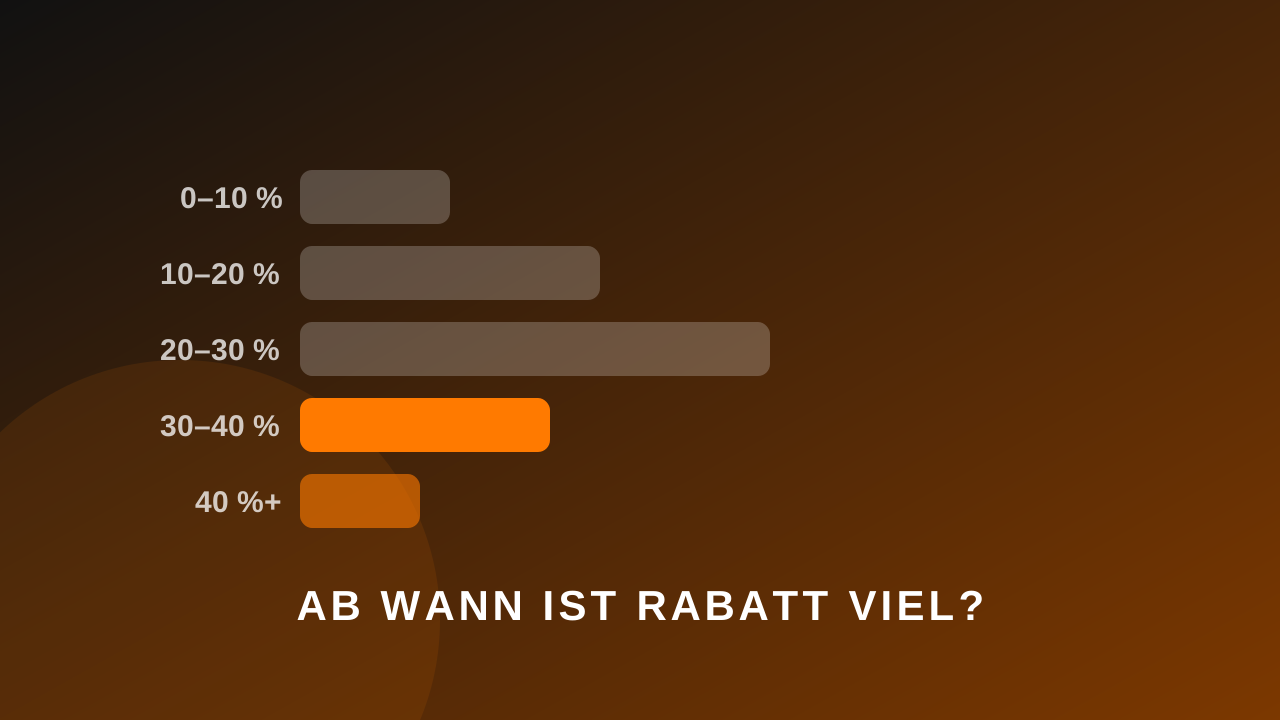
When is a discount actually big? A look at how discounts are distributed
20% off sounds small, 50% off sounds huge. But how rare big discounts really are only becomes clear from the spread across the live offer feed — shown here for your marketplace.